A Safe Return Is Only the Beginning: Why Reintegration Matters
 site-admin.
Coming home can be a powerful moment.
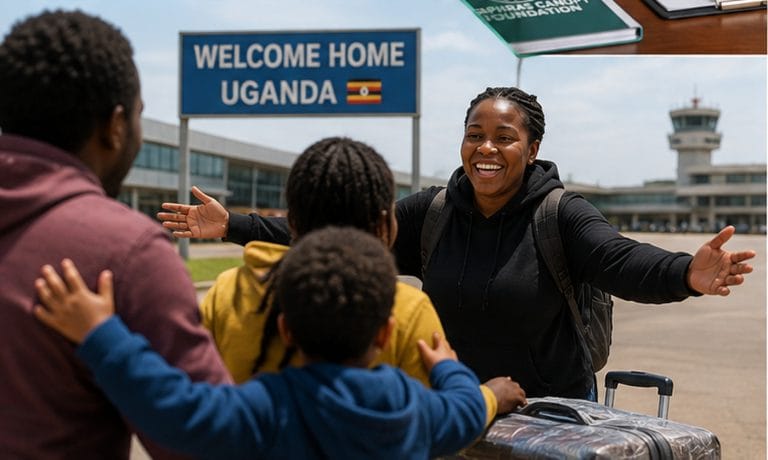
For a Ugandan who has been stranded abroad, stepping onto Ugandan soil may bring relief, familiarity and the comfort of knowing that a difficult period has ended.
But arrival does not automatically mean recovery.
A returnee still has to answer some very practical questions.
Where will I live? How will I earn an income? How will my family receive me? Can I use the skills I gained abroad? What happens if I return without savings? How do I begin again?
These questions explain why reintegration support in Uganda is such an important part of Epaphras Canopy Foundation’s safe return mission.
What reintegration really means
Reintegration is the process of helping a returning person become socially and economically stable again within their family and community.
It is not a single service.
It can include several forms of assistance depending on the individual.
For one person, the immediate need may be family reconnection. For another, it may be temporary accommodation. Another returnee may already have somewhere to live but need skills training or help developing an income-generating activity.
A useful reintegration process begins by understanding the person rather than assuming everyone needs the same thing.
Why return can be more difficult than expected
Someone who has spent years abroad may return to a very different household from the one they left.
Children may be older.
Parents may have aged.
Family businesses may have changed.
A spouse may have become accustomed to managing the household independently.
A returnee may also have expected to come home with more savings than they actually have.
This can create tension.
There can also be pressure from relatives who assume that anyone returning from the Middle East, Europe or another foreign destination must have significant financial resources.

That assumption can make a returnee feel embarrassed or isolated when the reality is different.
Good reintegration therefore recognises both economic and social realities.
Family reconnection
Family can be one of the most important sources of support after return.
It can also be a source of pressure.
Reconnection works best when expectations are realistic.
A returnee may need time to explain what happened abroad, why they returned and what they intend to do next.
Family members may also need clarity about what support they can reasonably provide.
Where appropriate, ECF seeks to encourage constructive reconnection and practical planning.
The objective is not to intervene unnecessarily in private family matters.
It is to reduce avoidable misunderstanding and help the returnee begin from a more stable position.
Reintegration and economic independence
Income is usually central to long-term stability.
A person who returns home but remains completely dependent on relatives can quickly become vulnerable again.
This is why reintegration and livelihood support need to be closely connected.
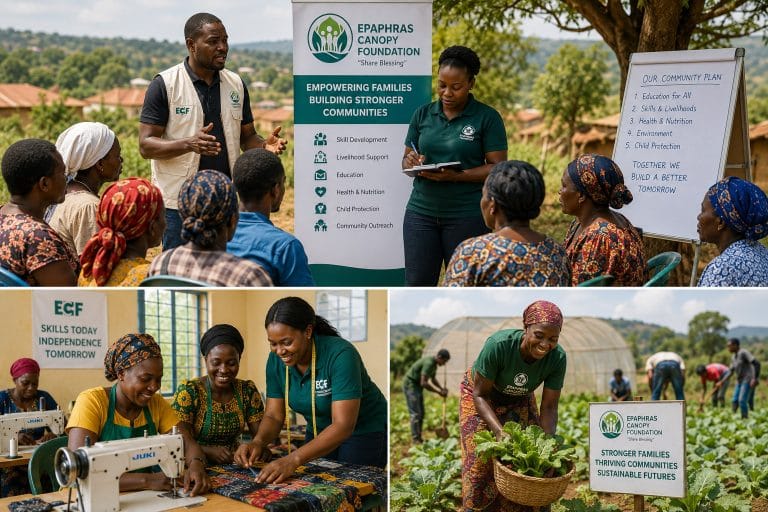
ECF’s stated mission includes social, educational and economic empowerment, and its programme profile places strong emphasis on education and practical skills.
That approach is particularly relevant for returnees.
Some people come back with useful work experience acquired abroad. The next question is how to translate that experience into an opportunity in Uganda.
Others may need new vocational skills.
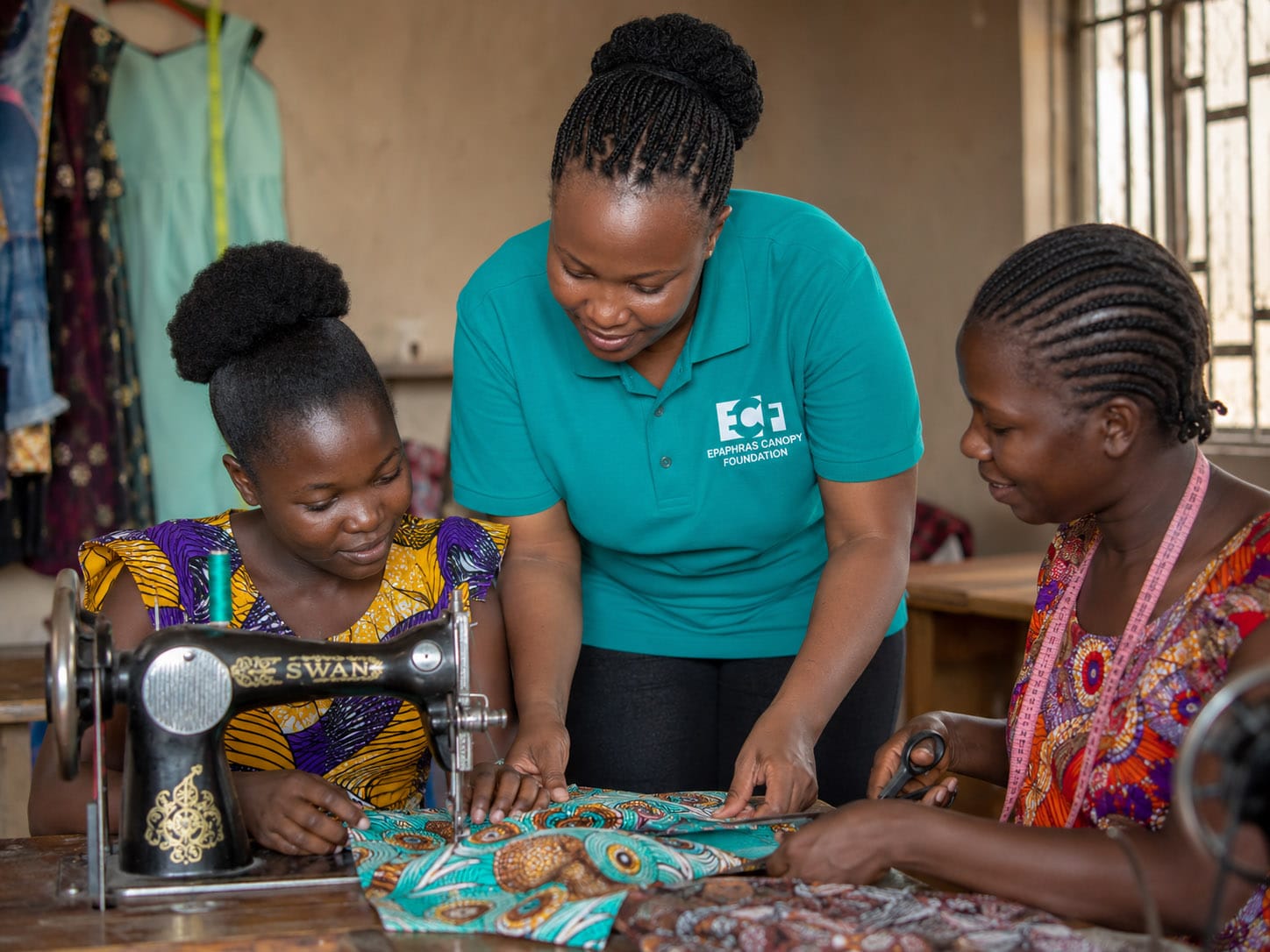
Possible pathways can include tailoring, agriculture, food preparation, carpentry, metalwork, retail, service businesses or other locally viable activities.
Skills assessment before training
Training should not be offered simply because a course exists.
The better starting point is to understand what a returnee already knows.
A woman who worked in hospitality abroad may already have experience in food handling, cleaning systems, customer care or housekeeping.
Someone who worked in retail may understand stock handling and customer service.
Another person may have administrative or technical experience.
A good reintegration plan should therefore ask:
What skills do you already have?
What kind of work interests you?
What opportunities are realistic in your community?
What additional training would strengthen your chances of earning an income?
This reduces the risk of putting people through training that does not match their abilities or local demand.
Small businesses can provide a practical route forward
Formal employment is not the only option.
For many Ugandans, self-employment and microenterprise can provide a more accessible route to income.
A returnee may start with a small retail activity, farming enterprise, tailoring service or food-related business.
But providing money alone does not guarantee success.
Small business support should also include basic planning.
A beneficiary needs to understand expected costs, pricing, customers, record keeping, savings and the difference between business money and household money.
This is especially relevant to ECF because its founder has a professional accounting and financial management background. George Epaphras Lwanga’s CV records more than a decade of experience in accounting, audit, taxation and financial management across several organisations.
Financial discipline can therefore become part of the reintegration philosophy rather than treating livelihood assistance as a simple cash transfer.
Health and well-being after return
Not every reintegration need is financial.
A returnee may need medical attention, nutritional support or referral to other services.
ECF’s broader organisational objectives include healthcare promotion and nutrition support for women and children.
Where a returnee has health needs, these should be considered before expecting immediate participation in training or business activities.
A person is more likely to build a stable livelihood when basic health and safety concerns have first been addressed.
Community acceptance matters
Long-term reintegration happens within a community.
Neighbours, relatives, local leaders and existing support networks can all influence how well a returnee settles.
Community-based organisations are therefore well positioned to connect returnees with local realities.
They can help identify training opportunities, potential livelihood activities, community services and other organisations that may provide specialised assistance.
ECF’s wider community work also means that returnees do not need to be treated as a completely separate population.
They can participate in the same skills, education, livelihood and community initiatives that support other vulnerable Ugandans.
Reintegration should protect dignity
Public storytelling around returnees requires care.
The fact that someone needed help coming home should not become a permanent label attached to that person.
Reintegration is about moving forward.
Images and stories should therefore show progress, participation and independence rather than repeatedly presenting someone in a moment of distress.

This is why ECF’s communication approach focuses on activities.
A returnee can be shown in a training session, discussing a business plan, reconnecting with family or participating in community life.
The image then communicates what support achieved.
What donors are really supporting
When someone contributes to a safe return campaign, the most visible expense may appear to be travel.
But a responsible programme must think beyond the ticket.
The donor may also be helping create the conditions for a successful return.
That could include case assessment, communication, reception, referrals, training, livelihood planning or other reintegration support.
In this sense, the real objective is not simply:
“She returned.”
It is:
“She returned, became stable and found a realistic way forward.”
Measuring reintegration by outcomes
A strong reintegration programme should gradually measure more than the number of people who arrived home.
Useful indicators can include whether a returnee has safe accommodation, whether family contact has been restored, whether training was completed, whether a livelihood was established and whether follow-up shows increasing independence.
ECF is still developing its programme systems, so responsible reporting should use verified figures rather than estimates.
As data improves, these indicators can help donors understand the difference their support is making.
Every return should lead somewhere
Safe return solves an immediate crisis.
Reintegration addresses the future.
Epaphras Canopy Foundation believes the strongest result is not simply seeing a Ugandan arrive at the airport.
It is seeing that person months later participating in family life, earning an income, using new skills and making decisions from a position of greater stability.
That is why return and reintegration belong together.
One gets someone home.
The other helps them stay home with dignity and opportunity.